
About Alpacas
Origin
Alpacas are native to the high-altitude regions of the Andes Mountains in South America, particularly Peru, Bolivia, and Chile. They were domesticated over 6,000 years ago by ancient Andean civilizations, who prized them for their soft, warm fleece. Unlike their larger relatives, llamas, alpacas were bred specifically for fibre production rather than as pack animals. Today, alpacas are kept worldwide, valued for both their luxurious fleece and their gentle, inquisitive nature.
Keeping Alpacas
Alpacas are herd animals and should never be kept alone. A minimum of two is essential, though small groups of three or more are ideal for their wellbeing. We would only consider selling one or two alpacas to existing herds. NOTE: They can only live in a group of the same sex, it is not recommended to mix males and females.
Alpacas don’t challenge fencing like some livestock, but secure fencing (typically post-and-rail or livestock mesh) to keep them safe. If you are interested in biosecurity for certain contagious diseases then please do not hesitate to get in touch.
Shelter is important but a simple field shelter that protects them from wind, rain, and extreme sun is sufficient. Shelters can also be beneficial for carrying out husbandry duties such as vaccinations, nail trimming, body condition scoring and so on.
Their Needs
Alpacas are relatively low-maintenance animals but still require attentive care. Their core needs include:
-
Companionship (they are highly social animals)
-
Consistent access to fresh, clean water
-
Adequate grazing or forage. Ad lib access to hay
-
Specific feed requirements – hard feed including specific minerals and vitamins
-
Shelter from extreme weather
-
Safe handling techniques - Handling should always be calm and consistent. Alpacas respond best to gentle interaction with plenty of patience and understanding
-
Regular health checks – Body condition scoring, jaw line examinations, general visual health examinations
-
Vitamin D supplementation during autumn through to early spring
-
Vaccinations: Typically for clostridial diseases (consult a vet for local recommendations)
-
Toe nail trimming (Every 2-3months)
-
Annual shearing (carried out by a professional alpaca shearer)
-
Regular body scoring, toenail trimming and fringe trimming
-
Performing Faecal egg counts and using specific parasite control
-
Rotational grazing if possible to reduce parasite load and maintain pasture quality
Reproduction & Breeding
Alpacas are induced ovulators, meaning ovulation occurs after mating rather than on a regular cycle. The male alpaca (Macho) makes an orgling noise to aid with ovulation.
-
Gestation period: Approximately 11–12 months
-
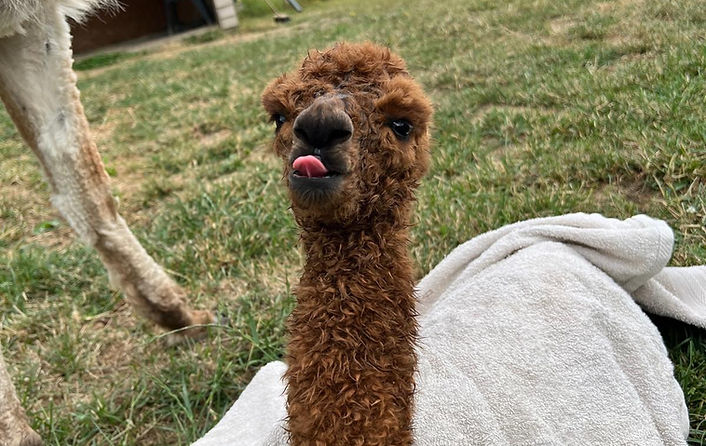
Cria (baby alpaca): Usually born during daylight hours (10am-3pm) and typically weighs 6–9 kg
-
Breeding age: Females are usually bred from around 18 months
Careful selection of breeding stock is important to maintain good fibre quality and overall health and temperament.
Frequently Asked Questions
Are alpacas easy to care for?
Yes, they are generally considered low-maintenance compared to many livestock animals, but they still require regular care, monitoring and specific handling techniques.
How much land do alpacas need?
A common guideline is 5 alpacas per acre, depending on pasture quality.
Do alpacas spit?
They can spit, usually at each other to establish hierarchy, especially when food is around. Spitting at humans is rare and typically a sign of distress.
Can alpacas live with other animals?
Yes, they can coexist with certain livestock such as sheep, but they are happiest with other alpacas. However, they are best kept separate due to their low worm burden tolerance, unlike other animals such as sheep who have a much higher tolerance.
How long do alpacas live?
Alpacas typically live 15–20 years.
Do alpacas need to be sheared?
Yes, they must be sheared annually.
Are alpacas good for smallholdings?
They are well-suited to smallholdings due to their manageable size, gentle temperament, relatively low environmental impact and complete cuteness